
Imagine this: 90% of consumers read online reviews before making a purchase. That single statistic underscores just how critical reviews are in shaping business success. Yet, many businesses face the challenge of linear growth, where every inch of progress depends on continuous effort and heavy investment.
Enter the “Review Flywheel” – a self-reinforcing system that uses customer reviews to drive sustainable growth. This strategy doesn’t just help you scale faster; it reduces dependence on founder input, builds ironclad credibility, and sets the foundation for long-term success. Let’s dive into how you can implement this transformative concept in your business.
Understanding the Review Flywheel
The Core Concept
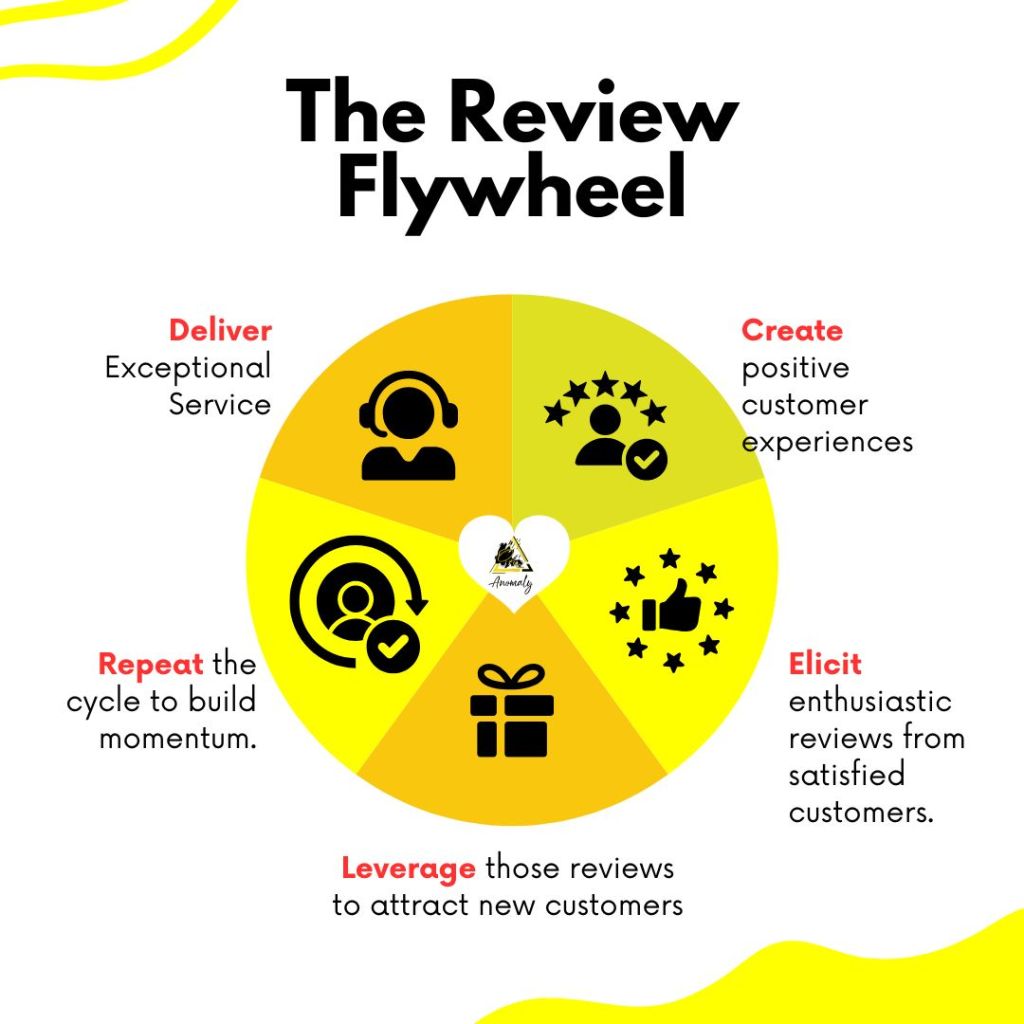
The Review Flywheel operates on a cyclical and self-sustaining process:
- Deliver exceptional service or products.
- Create positive customer experiences.
- Elicit enthusiastic reviews from satisfied customers.
- Leverage those reviews as social proof to attract new customers.
- Repeat the cycle to build momentum.
This simple, repeatable cycle compounds over time, creating exponential growth. Think of it as a perpetual motion machine for customer acquisition and retention.
Visual Representation
Picture a wheel where each spoke represents one step in the cycle. The more the wheel turns, the easier it becomes to maintain momentum, powered entirely by happy customers and their glowing reviews.
The Four Tactics to Fuel the Review Flywheel
Tactic 1: The “Surprise and Delight” Gift
Nothing captures a customer’s attention like a thoughtful, unexpected gesture. By surprising your customers with small tokens of appreciation, you boost satisfaction and encourage them to share their experiences.
Examples:
- A complimentary dessert at a restaurant.
- A personalized thank-you card or a branded gift card.
- Exclusive discounts for loyal customers.
Tool Tip: Loyalty programs with tiered rewards can make implementing this tactic seamless while tracking customer engagement.
Tactic 2: The “Third-Party Ask”
Instead of directly incentivizing customers to leave reviews, empower your employees to ask for them. This tactic channels the power of human connection while maintaining ethical review practices.
Why It Works:
- Employees who actively solicit feedback feel more engaged and invested.
- Customers are more likely to respond positively to a direct, personal request.
Tool Tip: Use employee incentive programs that offer rewards such as bonuses, gift cards, or public recognition to motivate your team.
Tactic 3: The “Discount at Delivery”
Offering a small discount at the point of sale in exchange for an immediate review is an excellent way to secure feedback while the experience is fresh.
Why It Works:
- Instant gratification ensures higher participation rates.
- Reduces friction by making the process quick and easy.
Tool Tip: Leverage point-of-sale systems integrated with review platforms like Google My Business or Yelp to streamline the process.
Tactic 4: The “Unlockable Value”
Provide customers with access to exclusive content, trials, or VIP perks in exchange for leaving reviews. This strategy works particularly well for B2B businesses or companies offering tiered service levels.
Examples:
- Free access to premium features.
- Invitations to exclusive webinars or events.
- Early access to new products or services.
Tool Tip: Use CRM software to track customer engagement and unlock incentives based on specific actions.

Implementing the Review Flywheel in Your Business
Step 1: Define Your Review Goals
Set SMART (specific, measurable, achievable, relevant, and time-bound) goals to keep your efforts focused. Identify which platforms matter most to your audience – Google My Business, Yelp, or industry-specific review sites.
Step 2: Choose the Right Tactics
Select tactics that align with your industry and customer base. For example:
- A cafe might excel with the “Surprise and Delight” tactic.
- A SaaS company might find the “Unlockable Value” approach more effective.
Test multiple strategies and track which ones deliver the best results.
Step 3: Track and Measure Results
Monitor critical metrics such as:
- Total number of reviews.
- Average star rating.
- Sentiment analysis of reviews.
- Conversion rates from reviews to sales.
Analyze these insights to optimize your tactics and refine your strategy.
Step 4: Showcase Social Proof
Put your reviews to work by prominently displaying them:
- On your website’s homepage and landing pages.
- In your email marketing campaigns.
- Across social media platforms with creative visuals.
Social proof builds trust and significantly influences purchase decisions.
Handling Negative Reviews
Negative reviews are inevitable, but how you handle them can set you apart from competitors.
Key Steps:
- Respond Promptly: Address concerns within 24 hours.
- Be Professional: Avoid defensive or dismissive language.
- Offer Solutions: Demonstrate your commitment to making things right.
Why It Matters:
When potential customers see how you handle criticism, they’re more likely to trust your brand. Here are ways to handle negative reviews.
Ready to get started?
The Review Flywheel isn’t just a tactic; it’s a mindset shift that transforms how businesses grow. By consistently delivering exceptional experiences and leveraging customer feedback, you can achieve sustainable, scalable growth.
Download our free Review Flywheel Implementation Checklist and take the first step toward building unstoppable momentum in your business.
Resources
- Alex Hormozi: The Power of Reviews in Business Growth
- Best Tools for Online Reputation Management
- Top CRM Software for Small Businesses
About the Author
With years of experience in content marketing and business development, One Anomaly specializes in helping businesses achieve exponential growth through actionable strategies. Follow us for more insights and resources tailored to your success.


What do you think?