
Your business has a website. You’re active on social media. Perhaps you’re investing in Google Ads, SEO, email marketing or paid social. You may have an internal marketing employee, or freelancers, supporting you.
Yet the question keeps coming back:
Why isn’t my marketing working?
The answer is not always that you need better ads, more content, or a bigger marketing budget.
Marketing often underperforms because there is a disconnect somewhere between the business goal, target market, offer, positioning, customer acquisition strategy, conversion process, sales follow-up, and measurement.
In other words, the problem may not be one marketing tactic. It may be the system those tactics are supposed to support.
That distinction matters because businesses can waste significant time and money replacing agencies, changing platforms, increasing advertising budgets, or producing more content without ever fixing the actual constraint on growth.
Before you spend more, diagnose where the system is breaking.
1. You Have Marketing Activity, But No Clear Growth Strategy
One of the most common marketing problems is also one of the easiest to overlook: activity gets mistaken for strategy.
Publishing content is an activity.
Running Google Ads is an activity.
Sending emails is an activity.
Redesigning a website is an activity.
A growth strategy explains how those activities work together to achieve a commercial objective.
For example, imagine a business wants to generate an additional $1 million in annual revenue. A strategic approach would work backwards from that goal:
- Which products or services will drive the additional revenue?
- Which customers are most likely to buy them?
- How many new customers are required?
- How many qualified opportunities are needed to generate those customers?
- What is the typical sales conversion rate?
- Where can those prospects be reached?
- What will it cost to acquire them?
- Can the business operationally handle the additional demand?
Only then should decisions about SEO, advertising, content, social media or other channels be made.
Warning signs you have activity without strategy
You may have this problem if priorities frequently change, each marketing channel operates independently, campaigns are launched because competitors are doing something similar, or nobody can clearly explain how marketing activity contributes to the company’s growth objectives.
The common mistake is responding to disappointing results by adding more activity.
More content.
More platforms.
More advertising.
More agencies.
But if the underlying strategy is unclear, adding activity can increase costs without improving performance.
What to do next: Define the commercial result first. Then determine what marketing needs to accomplish to help create it.
2. You’re Trying to Market to Everyone
“We can serve anyone who needs our service” may be technically true.
It is rarely a useful marketing strategy.
There is an important difference between people who could buy from your business and customers your business should actively pursue.
Your highest-value target market may be defined by profitability, buying power, urgency, customer lifetime value, sales cycle, geography, decision-making authority or strategic fit.
This becomes especially important when paid advertising is involved. Every dollar spent reaching someone unlikely to become a profitable customer reduces marketing efficiency.
Do you actually know which customers you want more of?
A useful target market analysis should go beyond age, gender, and generic personas.
Ask:
- Which customers generate the strongest margins?
- Which problems create enough urgency for customers to act?
- Which customers are easiest for us to retain?
- Which services or products create the most commercial value?
- Who normally makes or influences the purchasing decision?
- Which customers have both the need and the ability to pay?
The common mistake is assuming broader reach creates more opportunity.
Often, greater specificity creates better opportunity because your messaging, offer, advertising, and sales process can be designed around customers who are genuinely valuable to the business.
What to do next: Stop defining your audience by everyone you can serve. Identify the customers you strategically want to acquire.
3. Your Offer Doesn’t Give Customers a Strong Enough Reason to Choose You
Good businesses can still have weak offers.
A company may deliver excellent work but communicate it in exactly the same language as every competitor:
“Quality service.”
“Experienced team.”
“Customer-focused solutions.”
“Competitive pricing.”
“Trusted experts.”
None of those statements necessarily gives a prospective customer a compelling reason to choose one company over another.
Your offer needs to answer a more commercially important question:
Why should this customer choose your business instead of another option — including doing nothing?
Can customers quickly understand your value?
Strong positioning helps customers understand:
- who the solution is for;
- what important problem it solves;
- what outcome they can expect;
- why your approach is different or more appropriate;
- why they should trust you;
- what they should do next.
The common mistake is assuming customers understand your value because you understand your own business.
They don’t have your internal context.
If a potential customer reaches your website or advertisement and has to work to understand why your company is relevant, you create unnecessary friction before the sales conversation even begins.
What to do next: Review your website, ads, and sales materials from the customer’s perspective. If a qualified prospect cannot quickly understand the problem you solve and why your business is worth considering, sharpen the proposition before increasing promotion.
4. You’re Using the Right Marketing Channel for the Wrong Job
Businesses sometimes declare that a marketing channel “doesn’t work” when the real issue is that it was expected to do the wrong job.
Different channels influence different parts of the buying journey.
Search marketing can capture people already looking for a solution.
SEO can build discoverability around relevant searches over time.
Paid advertising can accelerate reach and demand capture.
Email can nurture prospects who already know your business.
Social media can support visibility, credibility and consideration.
Business development can create partnerships and commercial opportunities that inbound marketing may never generate on its own.
The strategic question therefore isn’t:
“Should we be on Instagram?”
It is:
“Where and how does our target customer make purchasing decisions, and what role should each channel play in influencing that decision?”
Why adding another marketing channel may make things worse
When results disappoint, businesses often add channels.
Now the same team is managing Instagram, LinkedIn, Facebook, TikTok, email, SEO, Google Ads and perhaps another campaign for good measure.
Resources become fragmented. Execution becomes inconsistent. Measurement gets harder.
The result can be more marketing with less impact.
What to do next: Assign every channel a specific commercial role. If you cannot explain what a channel contributes to customer acquisition, conversion, or retention, reconsider why you’re investing in it.
5. You’re Driving Traffic, But Your Website Isn’t Converting It
Website traffic is not the same as business growth.
You could double website visitors next month and generate no meaningful improvement in revenue if those visitors are the wrong people or your website fails to move qualified prospects towards action.
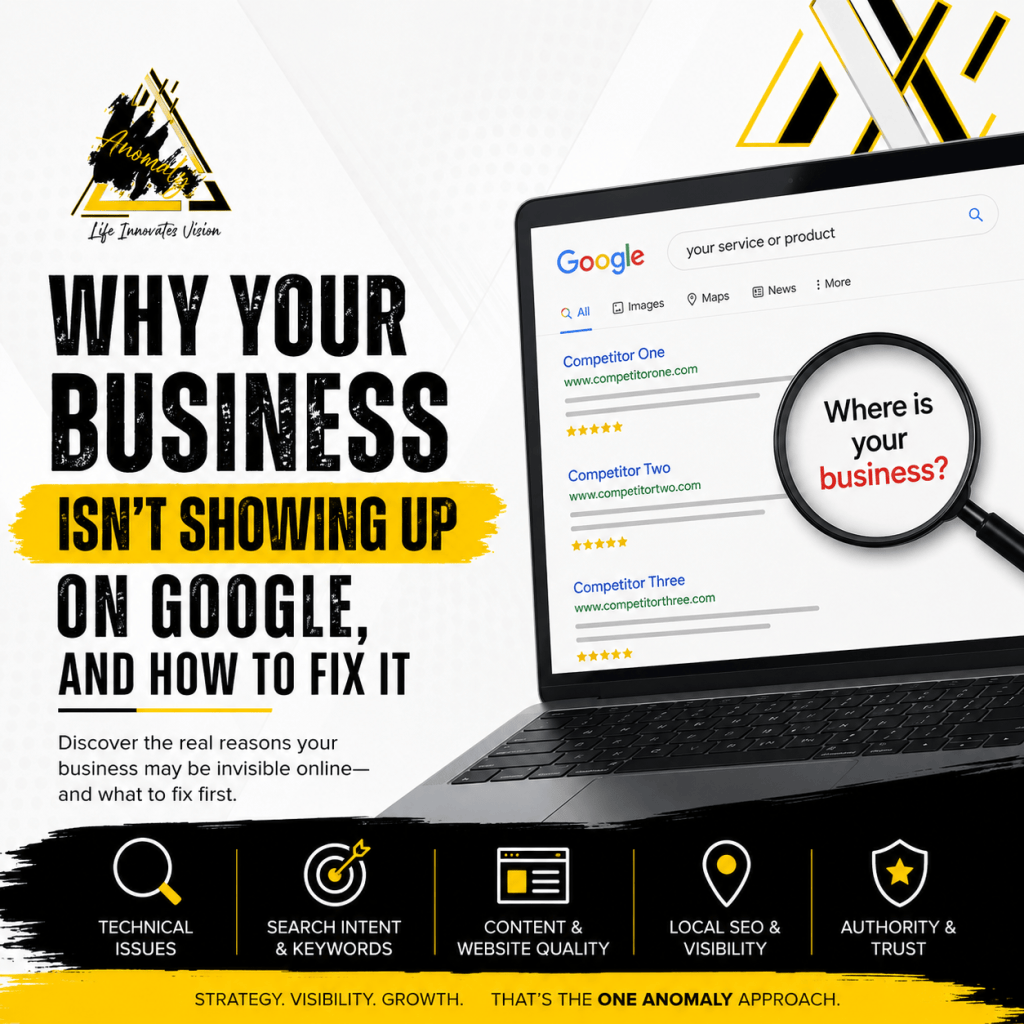
Why am I getting website traffic but no leads?
Several problems can cause this:
- Visitors do not match your ideal customer profile.
- Pages don’t match the intent behind the search or advertisement.
- Your value proposition is unclear.
- Calls to action are weak or difficult to find.
- The website lacks sufficient trust or proof.
- Mobile usability creates friction.
- Enquiry forms ask for too much information.
- Important service information is difficult to find.
- The website focuses heavily on the company but barely addresses the customer’s problem.
Your website should do more than prove your company exists.
It should function as part of your sales process.
A qualified prospect should be able to understand what you do, determine whether you may be relevant, build enough confidence to continue, and know what action to take next.
The common mistake is treating a website redesign as primarily a visual exercise. A beautiful website that does not support customer acquisition is still commercially underperforming.
What to do next: Evaluate your website based on the journey from visitor to qualified enquiry, not aesthetics alone.
6. You’re Generating Leads, But Losing Them After the Enquiry
This is where a supposed marketing problem can turn out to be a business development or sales problem.
Imagine marketing generates 50 qualified enquiries.
If enquiries receive slow responses, calls go unanswered, proposals are weak, follow-up is inconsistent, and nobody systematically nurtures prospects who aren’t ready to buy immediately, marketing may appear unsuccessful even though it successfully created demand.
Is your marketing failing — or is your sales process failing?
Look at what happens after someone becomes a lead.
How quickly are enquiries answered?
Who owns the lead?
How are prospects qualified?
Are conversations recorded in a CRM or another reliable system?
What percentage receives a proposal?
What percentage of proposals close?
What happens when someone says, “Not right now”?
How many times does the business follow up?
Where do opportunities most commonly disappear?
If those questions are difficult to answer, there may be a visibility problem between marketing and revenue.
The commercial impact can be substantial because the company may respond by spending more to generate additional leads while continuing to lose the opportunities it already has.
What to do next: Trace your customer journey from the first enquiry through closed business. Find the stage with the greatest drop-off before increasing lead-generation spend.
7. You’re Measuring Marketing Activity Instead of Business Results
Marketing dashboards can contain plenty of data while providing surprisingly little insight into business performance.
Impressions, followers, likes, website visits, and clicks can be useful indicators.
They are not automatically commercial outcomes.
Depending on your business model, leadership may need greater visibility into metrics such as:
- qualified leads;
- conversion rate;
- cost per qualified lead;
- customer acquisition cost;
- sales pipeline generated;
- proposal-to-close rate;
- revenue generated;
- customer lifetime value;
- return on marketing investment.
The correct metrics depend on the objective.
If the goal is awareness in a new market, immediate sales may not be the only appropriate measure.
If the goal is qualified lead generation, however, celebrating impressions while enquiries decline misses the point.
Why measurement is still difficult
Even sophisticated companies struggle with this.
Nielsen’s 2025 Annual Marketing Report found a significant gap between marketers’ confidence in holistic measurement and how many actually measure marketing performance holistically. The research points to challenges including siloed teams, unclear KPIs and fragmented measurement.
That matters because better marketing decisions depend on understanding more than what happened inside an advertising platform.
A customer might discover your business through Google, visit your website several times, see a LinkedIn post, receive an email and eventually speak with a salesperson before purchasing.
Attribution will not always be perfect.
The goal should not be to force every dollar of revenue into a beautifully tidy dashboard. The goal is to collect enough reliable information to make better commercial decisions.
What to do next: Build reporting around decisions. Every metric should help answer whether to continue, change, stop or increase an investment.
8. You Keep Changing Strategy Before It Has Time to Work
Another reason marketing doesn’t work is that businesses never give a coherent strategy enough time to produce useful evidence.
A campaign launches.
Results aren’t immediate.
The offer changes.
Then the audience changes.
Then the advertising platform changes.
Then the agency changes.
Then leadership decides to try something entirely different.
Three months later, the business has conducted plenty of activity but learned almost nothing.
How long should marketing take to work?
There is no credible universal answer.
Google Ads capturing high-intent searches may generate useful performance signals relatively quickly.
SEO and content marketing typically require longer periods to build visibility and authority.
Business development may involve lengthy sales cycles.
Email performance depends partly on the quality and maturity of the audience.
Brand-building can influence purchasing decisions long before it receives direct attribution.
Patience, however, does not mean blindly funding poor marketing.
A proper strategy should establish objectives, baseline performance, leading indicators, conversion milestones and review periods before campaigns begin.
The common mistake is making emotional decisions based on short-term fluctuations instead of predetermined performance criteria.
What to do next: Decide in advance what evidence would justify continuing, optimizing, scaling or stopping an initiative.
9. Marketing Is Operating Separately From the Rest of the Business
This may be the most important reason of all.
Marketing does not operate in a vacuum.
It interacts with pricing, sales, operations, customer service, product quality, capacity, positioning, retention and leadership decisions.
Marketing cannot indefinitely compensate for a poor customer experience.
It cannot make an uncompetitive offer compelling simply by showing it to more people.
It cannot repair a sales team that consistently fails to follow up.
And it cannot create profitable growth if acquiring each customer costs more than that customer is worth to the business.
Marketing cannot fix a broken business model
Sometimes the correct answer to “Why isn’t our marketing working?” is:
Marketing isn’t the first thing that needs fixing.
That is why marketing and business development should not operate in separate worlds.
Marketing can create visibility and demand. Business development and sales processes help turn opportunities into commercial relationships and revenue. Customer experience and retention then influence lifetime value, referrals and future growth.
When those functions share information, the business learns.
Sales can tell marketing which leads are genuinely valuable.
Marketing can identify changing customer behaviour.
Customer service can reveal recurring objections or frustrations.
Leadership can use that intelligence to make better decisions about products, pricing, markets and investment.
That is a growth system.
How Do You Diagnose What’s Actually Wrong With Your Marketing?
Before replacing your agency, rebuilding your website or increasing your advertising budget, examine five areas.
| Area | Question to Ask |
| Market | Are we pursuing customers with sufficient need, buying power and strategic value? |
| Message | Do those customers quickly understand why our business is relevant and different? |
| Acquisition | Are we reaching those customers through the right channels at the right stage of their buying journey? |
| Conversion | Can interested prospects easily progress from attention to enquiry to sale? |
| Measurement | Can we identify where prospects enter, progress, disappear and ultimately become customers? |
The purpose is to identify the constraint.
If your ads generate qualified traffic but your landing page converts poorly, buying more traffic probably isn’t the first solution.
If your website converts well but sales rarely closes qualified enquiries, redesigning the website probably isn’t the answer.
If customers convert and remain highly profitable but you simply aren’t reaching enough of them, increasing customer acquisition investment may make perfect commercial sense.
Diagnose first. Invest second.
Should You Spend More on Marketing When It Isn’t Working?
Usually, not until you understand what additional spending is supposed to amplify.
Increasing investment can make sense when you have evidence of a functioning acquisition model: the target customer is clear, demand exists, conversion is healthy, customer economics are attractive and the business has capacity for additional customers.
It makes considerably less sense when you have unclear positioning, poor conversion, weak sales follow-up or no reliable measurement.
Scaling an inefficient marketing system does not solve the inefficiency. It scales the waste.
Before increasing your budget, determine whether budget is actually the constraint.
When Can Your Internal Team Fix the Problem?
Not every marketing problem requires an outside consultant or agency.
An experienced internal team may be perfectly capable of correcting performance when the business has a clear strategy, reliable data, the required expertise and enough capacity to execute.
If one landing page is underperforming and your team can identify why, test alternatives and measure the result, bringing in another company may add unnecessary complexity.
Outside strategic support becomes more valuable when the problem crosses multiple functions or nobody can confidently identify the constraint.
That can happen when:
- significant money is being spent without clarity on return;
- multiple marketing channels are underperforming;
- marketing and sales disagree about lead quality;
- internal teams disagree about priorities;
- growth has plateaued;
- the business is preparing for significant advertising investment;
- the company is entering a new market;
- leadership has execution resources but lacks senior strategic marketing direction.
At that point, the cost of continuing to make disconnected decisions can become greater than the cost of getting an objective strategic diagnosis.


Frequently Asked Questions
Why isn’t my marketing generating leads?
Marketing may fail to generate leads because you’re targeting the wrong audience, your offer or messaging is weak, you’re using inappropriate acquisition channels, demand is insufficient, or your website and conversion process create friction. Start by identifying whether the problem is reach, relevance or conversion rather than assuming you simply need more exposure.
Why am I getting leads but not sales?
If leads are being generated but few become customers, examine lead quality and the sales process. Look at response times, qualification, follow-up, pricing, proposals, objections and close rates. Generating more leads will not necessarily solve a conversion problem.
How do I know if my marketing strategy is working?
Define success before launching campaigns. Depending on the objective, measure qualified opportunities, conversion rates, acquisition costs, pipeline, revenue and customer value alongside appropriate leading indicators such as traffic or engagement. Marketing performance should ultimately connect to an agreed business objective.
Should I increase my advertising budget if leads are slow?
Not automatically. First determine whether budget is limiting reach or whether the campaign has a targeting, messaging, offer or conversion problem. Increasing spend on a campaign with weak economics can simply increase losses faster.
How long does it take for a marketing strategy to work?
It depends on the channel, market, buying cycle and objective. Paid search can sometimes produce actionable data relatively quickly, while SEO, content, brand development and B2B business development may require significantly longer. Establish realistic evaluation periods and success criteria before starting.
Do I need a marketing agency or an internal marketing team?
It depends on what is missing. An internal team can be effective when strategy, leadership and specialist capabilities already exist. External support can make sense when a company needs capabilities it cannot justify hiring full-time, requires an independent strategic perspective, or needs marketing and business development expertise across several parts of the growth system.
Before You Spend More on Marketing, Find the Real Growth Problem
If your marketing isn’t working, resist the temptation to immediately add another campaign, platform or supplier.
Find the constraint first.
Your problem could be targeting.
It could be positioning.
It could be your website.
It could be advertising.
It could be lead quality.
It could be sales follow-up.
Or each of those elements could perform reasonably well individually while failing to operate as one coherent commercial system.
Effective marketing should help your business reach the right market, create demand, generate opportunities, convert customers and support profitable growth.
That requires more than executing marketing tactics. It requires understanding how marketing decisions connect to the wider business.
If your company is already investing in marketing but growth remains inconsistent — or you’re preparing to significantly increase your marketing or advertising investment — this is where a strategic review can be valuable.
One Anomaly works across Marketing Strategy and Business Development to examine the wider customer-acquisition and growth system: what you’re selling, who you’re targeting, how you’re reaching them, what happens when they respond, and where opportunities are being lost.
The objective isn’t to recommend more marketing for the sake of it. It’s to identify what should be fixed, what deserves greater investment and what may not be worth funding at all.
Before you spend more trying to make marketing work, talk to One Anomaly about what’s actually holding growth back.
Learn More
Marketing Agency vs In-House Marketing: Which Is Right for a Growing Service Business?
Your service business has reached the point where marketing can no longer be handled whenever someone has time. You need consistent lead generation, stronger SEO, paid advertising, content, reporting and a strategy connecting those activities to revenue. Now comes the decision: Should you hire an in-house marketer or work with a marketing agency? Neither is…

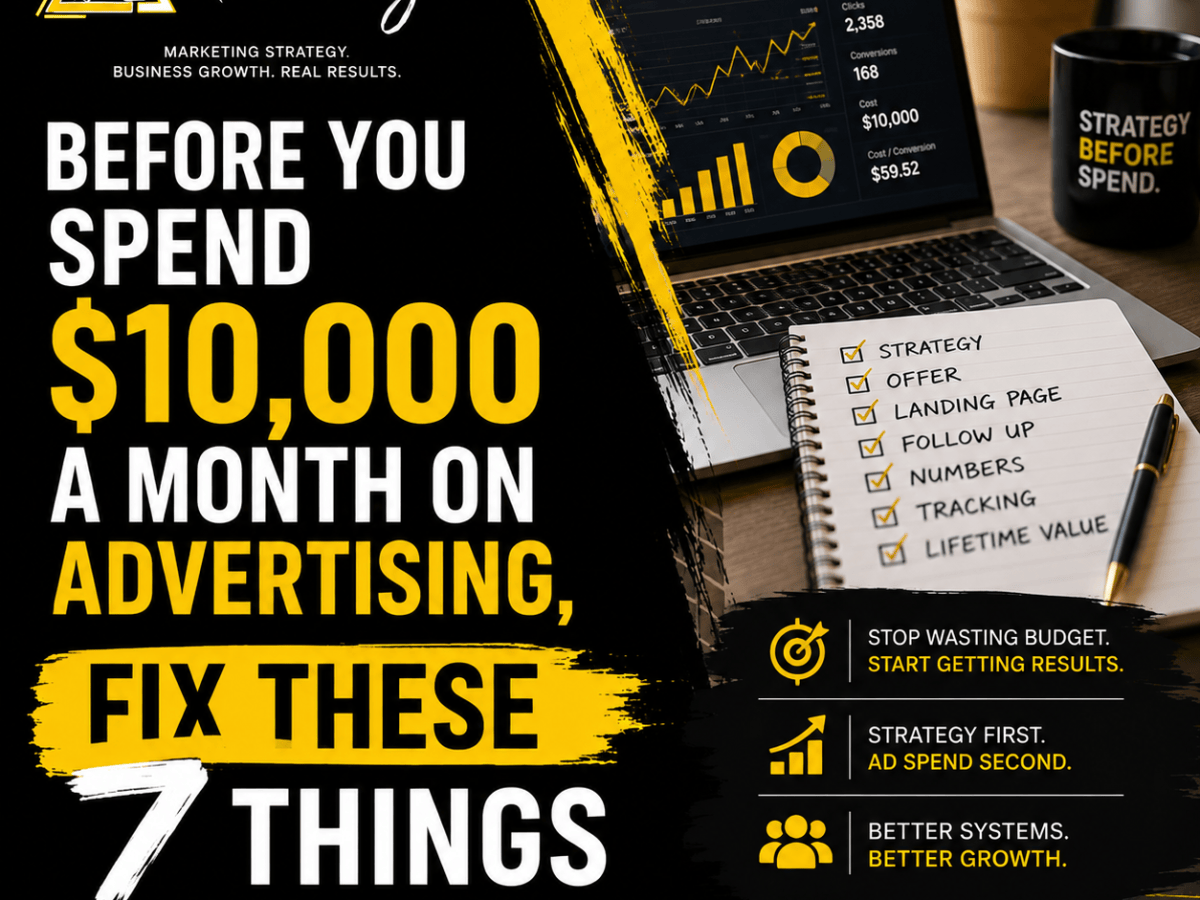
Before You Spend $10,000 a Month on Advertising, Fix These 7 Things
Before spending $10,000 a month on advertising, make sure your business is ready to turn that investment into revenue. Discover seven critical areas to fix before scaling your ad budget.
Something went wrong. Please refresh the page and/or try again.

What do you think?